

Morici, Longo & Associates Trial Lawyers James J. Morici, Jr. and Brian S. Shallcross successfully concluded litigation on behalf of the estate of a 67-year-old construction laborer, resolving the case with a $2,000,000 settlement.
The laborer was attempting to assemble a scaffold at a suburban Chicago construction site when he fell from an elevated platform. He died from head injuries.
What the Case Was About
The estate's case centered on two failures.
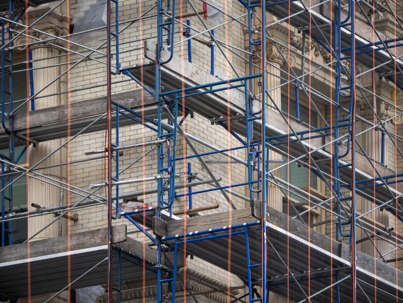
The first was how the masonry subcontractor moved steel tubular scaffolding from the ground up to the elevated platform where the laborer was working. The estate's claim was that those methods were unsafe and caused him to lose his balance. The second was fall protection: according to the estate's claims, neither the property owner, the masonry subcontractor, nor the general contractor supplied adequate fall protection.
What Federal Rules Say About Fall Protection for Scaffold Work
Federal OSHA rules require that anyone working on a scaffold more than 10 feet above a lower level be protected from falling. The rule is different for workers who are putting a scaffold up. Their employer has to provide fall protection wherever it's feasible and doesn't create a greater hazard, and a "competent person" (OSHA's term for someone who can identify hazards on the site and has the authority to correct them promptly) makes that call. Scaffolds can be erected only under that person's supervision. The full text is in OSHA's scaffold standard, 29 CFR 1926.451.
These are general federal standards, not findings in this case.
Who Can Be Held Responsible When a Worker Falls From a Scaffold in Illinois?
Often more than one company. The property owner, the general contractor, and each subcontractor control different parts of a job site, and a claim can be brought against any of them, other than the worker's own employer, whose negligence contributed to the fall. The firm's construction accident cases page explains how these claims work.
Frequently Asked Questions
Can a family file a wrongful death lawsuit after a construction worker dies in Illinois?
Yes, if the death was caused by someone's wrongful act, neglect, or default, and the worker could have sued had he lived (740 ILCS 180/1). The case is brought by the deceased person's personal representative (the person who handles the estate) for the benefit of the surviving spouse and next of kin. More on wrongful death claims.
Does workers' compensation stop a family from suing after a construction death?
Not entirely. Workers' compensation generally bars a lawsuit against the worker's own employer. But claims against other companies whose negligence caused the death can still go forward, and on a construction site that can include the property owner or another contractor. These are called third-party claims.
How long does a family have to file a wrongful death claim in Illinois?
Generally within two years of the death, with limited exceptions.
What fall protection is required when workers are putting up scaffolding?
The employer must provide it where it's feasible and doesn't create a greater hazard. A competent person makes that decision and supervises the work. The firm's scaffolding accidents page covers this hazard in more detail.
Dedicated to Protecting Injured Construction Workers
Morici, Longo & Associates has concentrated its practice in representing construction workers injured or killed by construction site safety failures since its founding in 1998. If your family has lost someone on a construction site, call (312) 779-0366. Consultations are always free, and no attorney's fees are charged unless a recovery is obtained on your behalf.
Prior results do not guarantee or predict a similar outcome in any future case. Each case depends on its own facts. This post is general information and is not legal advice.